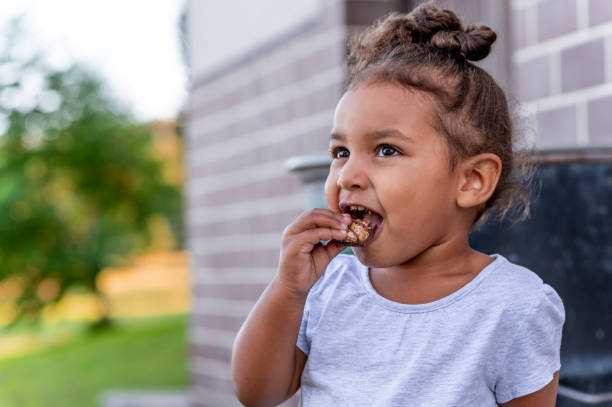
If your child always chews on the same side of their mouth, it is easy to brush it off as a quirky habit. Sometimes that is exactly what it is. Other times, it is a sign that their chewing function is working around discomfort, an erupting tooth, or a developing bite that has not settled evenly on both sides.
Chewing on one side is a behavior, not a diagnosis. Dentists sometimes call it unilateral chewing, and the term simply describes the pattern, not the cause. It can point to a sore tooth, a loose baby tooth, an erupting permanent tooth, or a difference in how the upper and lower teeth come together. In some children, it relates to a functional jaw shift, a developing crossbite, or the normal ups and downs of jaw growth during childhood. A pediatric dentist’s job is to figure out which of these is happening, and whether the pattern is temporary or something that needs a closer look.
This guide walks through how to tell the difference, what causes one-sided chewing, and when it is time to bring it up at your child’s next visit in Spring, TX, or The Woodlands.
Occasional side preference is common and usually nothing to worry about. Consistently avoiding one side, especially alongside pain, jaw shifting, asymmetry, or difficulty chewing, is what warrants a closer look.
Healthy chewing typically involves both sides of the mouth working together over the course of a meal. That does not mean a child alternates sides with every single bite. Kids naturally favor whichever side feels more comfortable or efficient in the moment, and that can shift from day to day.
What matters is the pattern over time. A single meal where your child chews on one side is not a red flag. A pattern that repeats for weeks, especially with pain, jaw shifting, an uneven bite, or noticeable difficulty chewing, is.
It helps to separate short-term habits from a lasting pattern.
| Likely Temporary | Worth Watching |
|---|---|
| A new tooth is erupting | Child regularly avoids one side, day after day |
| Minor, short-lived irritation | Consistently moves food to the same side |
| A passing food preference | Complains about chewing or pain |
| Brief sensitivity that resolves on its own | Visibly shifts the jaw when biting down |
| Has a noticeably uneven bite |
One meal tells you very little. A pattern tells you a lot. If a child’s chewing preference shows up consistently over several weeks, it is worth moving from casual observation to a professional look. This is the same logic behind routine growth monitoring in pediatric dentistry: a single data point rarely means much, but a repeated one deserves attention. Observing the pattern first, then bringing it to a clinical evaluation, gives a pediatric dentist the information needed to decide whether ongoing monitoring over time is the right next step.
Before jumping to conclusions about a developing bite problem, it helps to rule out simpler explanations first.
If chewing hurts on one side, a child will naturally shift the work to the other side. Cavities, tooth sensitivity, a developing dental infection, a loose tooth, or sore gums can all make one side of the mouth less comfortable to use. This avoidance is not always something a young child can describe in words. Sometimes chewing preference is the clearest clue a parent gets.
The mixed-dentition years, when baby teeth and permanent teeth are both present, are a common source of one-sided chewing. A loose tooth that a child is avoiding, or an adult tooth coming in behind a baby tooth that has not yet fallen out, can make chewing feel different on that side. The same is true when baby teeth are not falling out on schedule. Understanding a typical permanent tooth eruption timeline can help parents recognize when a chewing change lines up with a normal eruption stage rather than something that needs closer evaluation.
This is where the conversation shifts toward orthodontics. If the teeth on one side meet more evenly than the teeth on the other, a child will often gravitate toward the side that feels more stable and comfortable. That preference is not random. It reflects a real difference in how the bite functions from one side to the other.
Occlusion is simply the term for how the upper and lower teeth come together when a child bites down. When the tooth contacts are uneven from one side to the other, the jaw may naturally settle into a position that avoids the interference, and one-sided chewing can follow. This does not happen in every child with a bite difference. It is one possible outcome, not a certainty.
A functional jaw shift happens when a child moves their lower jaw slightly sideways or forward as they close their mouth, because their teeth interfere with the most natural, direct path of closure. Instead of biting straight down, the jaw slides to find a position where the teeth fit together more comfortably. Over time, that altered closure pattern can contribute to an asymmetric bite position. The American Academy of Pediatric Dentistry’s guidance on developing occlusion recognizes evaluation of jaw function, not just static tooth alignment, as part of managing a child’s developing bite.
A few things parents sometimes notice at home include:
These are observations worth mentioning at a dental visit, not something to diagnose at home. A pediatric dentist can determine what is actually happening with a hands-on exam.
A crossbite occurs when one or more upper teeth bite inside the lower teeth, rather than sitting in their typical position outside them. It is one of the more common bite relationships that can accompany one-sided chewing in children.
A functional shift and a crossbite often show up together, and the relationship can run in either direction. Sometimes a functional shift develops because a crossbite is already present, with the jaw sliding to accommodate teeth that do not line up. Other times, a repeated shift in how the jaw closes can contribute to a crossbite pattern as the bite settles. Either way, the result is often called a unilateral crossbite, or a posterior crossbite when it affects the back teeth.
That same shifting motion is also one of the ways a functional discrepancy can carry over into visible jaw asymmetry over time, which is part of why persistent cases benefit from a closer look rather than a wait-and-see approach. For a full explanation of how crossbites develop and when treatment is typically considered, the practice’s dedicated article on crossbite in children covers that topic in more depth.
A child’s jaws, teeth, and facial structures are still actively developing, which is exactly why persistent asymmetric function during these years deserves a professional assessment. Early evaluation is about gathering information while there is still time to guide growth, not about rushing into treatment.
This is the question many parents are really asking, and it deserves a careful answer. Persistent asymmetric chewing does not automatically cause an uneven face. What the evidence supports is a different, more nuanced picture: persistent asymmetric chewing can occur alongside functional shifts, bite discrepancies, and asymmetric jaw function, and these factors are worth monitoring together as a child grows.
During a visit, a pediatric dentist may pay attention to chin position, how the jaw closes, right-to-left facial balance, the bite relationship, and how freely the jaw moves. None of these findings alone confirms a problem. Together, they help build a fuller picture of how a child’s bite and jaw are developing.
Because children are still growing, a functional discrepancy that seems minor today can look different in a year. That is the reasoning behind growth monitoring: a growing child paired with a persistent functional issue is a reason to track change over time, not necessarily a reason for immediate treatment. Parents curious about how a child’s jaw develops at different ages can review how jaw growth changes during childhood for more context on this timeline.
One-sided chewing rarely shows up as an isolated symptom. Use this as a quick checklist of related signs to watch for:
Pain changes the urgency of the situation. If your child complains of discomfort while chewing, that is a reason to schedule a dental evaluation rather than wait and watch. A dentist can rule out decay, an erupting tooth, or another dental cause before considering whether a bite issue is involved.
This distinction matters. The absence of pain does not rule out a bite interference, a crossbite, a functional shift, or eruption-related changes. Some children adapt to a functional shift comfortably enough that it does not hurt, even though the underlying bite relationship still benefits from evaluation.
A thorough evaluation looks at more than just the teeth in a single moment. It typically includes:
The first step usually rules out decay, sensitivity, gum problems, or eruption-related discomfort, since these are often the simplest explanation for a chewing preference.
A dentist observes the jaw in motion, not just the static position of the teeth. This dynamic view is often where a functional shift becomes visible.
This includes looking at tooth contacts, checking for a crossbite, and comparing the midline and arch relationship from one side to the other.
Function and growth are connected, so a dentist may assess facial balance alongside how the bite comes together.
Since the mixed-dentition period can change occlusion as new teeth arrive, ongoing monitoring helps track whether a chewing pattern is settling or persisting.
A pediatric orthodontic evaluation may be appropriate when one-sided chewing occurs alongside a crossbite, a functional shift, a significant bite discrepancy, jaw asymmetry, crowding, a narrow upper arch, or persistent abnormal tooth contacts. Families searching for a pediatric orthodontist, a children’s orthodontist, or orthodontics for kids are often trying to figure out exactly this: whether what they are seeing at home is worth a specialist’s opinion. Parents in our area sometimes start that search with an orthodontist in The Woodlands, when the more useful first step is simply having a pediatric dentist take a look.
This distinction is worth repeating. An evaluation can lead to several outcomes: monitor now and reassess later, refer to a specialist for a second opinion, or begin treatment when it is genuinely appropriate. Being evaluated is simply the first step toward understanding what, if anything, needs attention.
A child’s stage of dental development, whether primary dentition, mixed dentition, or the eruption of permanent teeth, shapes what a dentist recommends. A finding that calls for close monitoring at age five might call for a different approach at age eight, simply because the jaw has had more time to grow and settle.
Sometimes. When a functional crossbite is related to a narrow upper arch or an arch-width discrepancy between the upper and lower jaw, orthodontic expansion may become part of the treatment plan.
One-sided chewing by itself, however, is not a reason to jump straight to a palate expander. The underlying bite relationship needs to be evaluated first. If you are curious about how that process works, the article on when a child may need a palate expander explains what expansion addresses and how a dentist decides whether it is the right fit.
A little observation before your appointment can make the evaluation more productive. It helps to note:
There is no need to manipulate your child’s jaw or repeatedly test their bite at home. Simple observation over a week or two gives a dentist enough information to work with.
Routine pediatric dental visits are a natural opportunity to catch a chewing pattern before it becomes a bigger question. At Growing Great Grins, Dr. Leslie Blackburn and the team look at both dental health and developing oral function during regular checkups, which means a chewing preference you mention at a routine cleaning does not require a separate, urgent appointment to start the conversation.
Families across Spring, TX and The Woodlands bring these kinds of questions to a pediatric dentist in Spring, TX that they already trust for everyday care, precisely because it lets one visit cover both the cleaning and the bigger-picture check on how a child’s bite is developing. Many families searching for a pediatric dentist in The Woodlands that parents recommend are really asking this same question: whether a chewing habit they’ve noticed at home is worth mentioning at the next visit.
It is a good idea to reach out when the pattern persists over several weeks, develops suddenly, occurs with pain or swelling, involves a visible jaw shift, shows up alongside a crossbite, or starts to affect how well your child eats.
If any of that sounds familiar, schedule an evaluation with our Spring, TX team so we can take a closer look at what is behind your child’s chewing pattern and what, if anything, it calls for next.
Possible causes include tooth discomfort, changes related to tooth eruption, differences in how the teeth meet, or a functional jaw shift. A dental evaluation can help narrow down which one applies.
Yes. Certain crossbite relationships change how the upper and lower jaws meet, and that difference can contribute to a child favoring one side when chewing.
Not automatically. Persistent asymmetric chewing can occur alongside functional shifts and bite discrepancies, and these patterns are worth monitoring as a child grows, but one-sided chewing on its own does not guarantee facial asymmetry.
This may be a functional jaw shift, which happens when the teeth interfere with a straight bite path, and the jaw slides to find a more comfortable position. It is worth having a dentist evaluate directly.
Start with a pediatric dentist. They can evaluate dental causes and developing bite function, then determine whether a referral for orthodontic assessment makes sense.