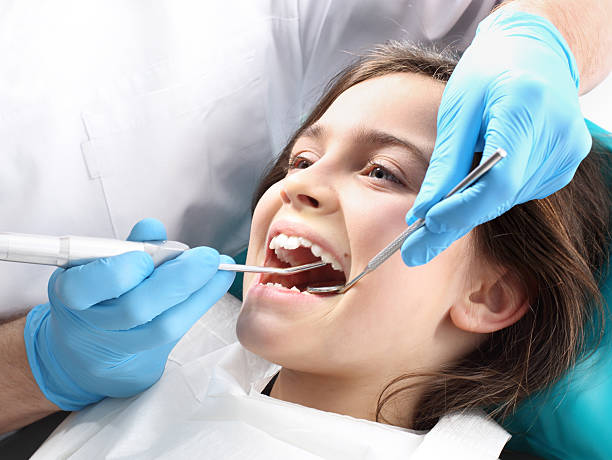
When a child’s upper front teeth sit noticeably farther forward than the lower front teeth, dentists describe that relationship as increased overjet. Some horizontal overlap between the upper and lower incisors is completely normal. What matters is whether the distance is large enough to affect lip closure, everyday function, appearance, injury risk, or the way the bite is developing.
Overjet describes a relationship, not automatically a condition that requires treatment. Plenty of children have some overjet and never need anything more than routine monitoring. This guide covers what overjet means, why it happens, how it differs from an overbite, and when it is worth bringing up at a visit here in Spring, TX.
Upper incisors normally sit somewhat ahead of the lower incisors when a child bites down. Overjet is simply the term for that front-to-back horizontal distance. Parents often describe it more casually as front teeth sticking out, and that description is fine for everyday conversation, but overjet is the clinical term dentists use to describe the actual measurement.
There is no single number that applies to every child, and it isn’t something a parent can reliably self-diagnose by eyeballing a smile. Pediatric dental professionals weigh the amount of projection alongside the child’s age, eruption stage, jaw relationship, oral habits, lip closure, and overall occlusion. The same amount of overjet can mean something different in a five-year-old with baby teeth than in a ten-year-old whose permanent incisors have already erupted.
This distinction trips up a lot of parents, and it is worth clearing up early.
Overjet measures front to back. It describes how far the upper incisors project ahead of the lower incisors.
Overbite measures top to bottom. It describes how much the upper front teeth vertically overlap the lower front teeth when the mouth is closed.
A simple way to remember it: overjet is how far forward, overbite is how far down. A child can have increased overjet, increased overbite, both, or neither. They are related but separate measurements, and treating them as interchangeable can lead to confusion about what is actually going on with a child’s bite.
There is rarely one single cause. A few different factors tend to contribute, sometimes together.
The relative position of the upper and lower jaws can influence how the incisors line up. Facial development and relative jaw growth both play a role, which is why dentists like to track jaw growth during childhood across multiple visits rather than judging from a single snapshot.
Sometimes the jaws are well aligned, but the incisors are tilted or proclined forward on their own. A skeletal relationship involves the jaw bones, while a dental inclination involves the angle of the teeth within otherwise normally positioned jaws. The two can look similar to a parent but call for different approaches.
Persistent sucking habits, whether from a thumb, finger, or pacifier, can influence how thumb-sucking teeth and the developing bite settle over time, especially the longer they continue once permanent teeth are due to erupt. Parents often ask when thumb sucking becomes a problem, and the honest answer depends on how intense and how long the habit continues relative to a child’s eruption stage. Parents wondering how thumb sucking affects a developing bite can find a more detailed breakdown of when the habit becomes a concern.
The way a child’s tongue and lips rest and function can interact with developing tooth position. This area is still being studied, and it would overstate the evidence to claim that any particular tongue posture or exercise routine reliably corrects or prevents overjet. Oral muscle function is one piece of a larger picture a dentist considers, not a stand-alone fix.
Not exactly. “Buck teeth” is a casual, non-clinical phrase for protruding upper front teeth. Increased overjet is the accurate clinical description of that same relationship, and it’s the term a pediatric dentist will use, without the negative connotation the colloquial phrase sometimes carries. Overjet is one specific type of malocclusion, the general clinical term for any bite relationship that doesn’t fit the expected pattern between upper and lower teeth.
This is one of the more practical reasons increased overjet gets attention beyond appearance.
Front teeth that sit farther forward can be more exposed during falls, playground accidents, sports, and other collisions. When the lips cannot fully cover teeth that project forward, there is simply less natural cushioning in the way during an impact.
A knocked or chipped permanent incisor is a different situation than an injury to a baby tooth, since permanent teeth don’t get replaced. That’s part of why protecting newly erupted permanent front teeth during the mixed-dentition years gets extra attention. A systematic review of overjet and dental injury risk found that children with an overjet of 3mm or more in the primary dentition, and 5mm or more once permanent teeth are erupting, face a meaningfully higher likelihood of dental trauma than children with smaller overjet.
For active kids, particularly those in contact sports, a professionally fitted mouthguard offers real protection for front teeth that already carry a higher exposure risk. This is worth a conversation at a dental visit rather than an assumption that any mouthguard will do the job equally well.
Not every child with overjet experiences these, but they are worth knowing about.
Some children with more pronounced overjet find it harder to bring their lips together comfortably at rest, sometimes called reduced lip competence. This does not happen in every case, but when it does, it factors into a dentist’s evaluation.
The front teeth help bite into food before the back teeth take over chewing. A significant horizontal gap between upper and lower incisors can occasionally make that initial bite less efficient.
In some bite relationships, uneven contact between opposing teeth can also lead to visible wear patterns that a dentist may notice during a routine exam.
As children get older, some become more self-conscious about prominent front teeth, particularly around the pre-teen years. A normal appearance is never something to frame negatively, and self-consciousness alone is not a clinical diagnosis. Clinical decisions about whether and when to treat overjet should weigh function, oral health, and development, not appearance in isolation.
There is no single answer here, and it depends on the individual child. Overjet can change as the jaws continue to develop, as permanent teeth erupt, as incisor position changes, as oral habits continue or stop, and as orthodontic development progresses. It is not accurate to promise that overjet will resolve on its own, and it is equally inaccurate to assume it will always worsen without treatment.
A single visit gives a snapshot. Comparing that snapshot to a baseline taken earlier, and watching how the relationship changes as teeth erupt and jaws grow, lets a dentist see an actual pattern rather than guess from one appointment, and that pattern is what ultimately informs whether a treatment decision makes sense.
The overjet relationship often becomes clearer once the permanent front teeth have erupted, since baby teeth don’t always predict exactly how the adult teeth will settle. This stage is a natural checkpoint for re-evaluating a bite that was being watched during the earlier mixed-dentition years.
A few situations are worth raising at a dental visit sooner rather than waiting for the next routine cleaning:
A dental evaluation looks at more than just how far forward the teeth appear.
A dentist can assess the horizontal distance between the incisors using a clinical exam, without parents needing to attempt any measurement at home.
This looks at whether the teeth themselves are angled forward, separate from the position of the jaws underneath them.
This looks at the skeletal contribution, comparing how the upper and lower jaws relate to each other.
A dentist also observes whether the lips close comfortably, not just the static position of the teeth.
Overjet rarely exists in complete isolation from the rest of the bite. A thorough evaluation also considers whether an overbite, a crossbite in children, an open bite, or crowding is present. Overjet sits at the opposite end of the horizontal spectrum from underbite and lower jaw development, so it helps to understand the two as related but distinct relationships rather than the same issue.
An orthodontic evaluation may be appropriate when increased overjet is substantial, associated with trauma risk or functional difficulty, linked to an underlying jaw discrepancy, or persistent through important developmental stages. Families searching for a pediatric orthodontist near me, a children’s orthodontist, or orthodontics for kids near me are often trying to answer this exact question: is what we’re seeing worth a specialist’s opinion. That search sometimes starts with an orthodontist in The Woodlands, when the more useful first step is simply raising the concern with a pediatric dentist first.
This is worth saying plainly: an evaluation is not a commitment to treatment. Possible outcomes include monitoring growth, monitoring an oral habit, observing how permanent teeth erupt, reassessing at a future visit, interceptive treatment for select cases, or orthodontic treatment once development reaches an appropriate stage.
Dental overjet, skeletal overjet, and habit-associated overjet are not the same thing, even though they can look identical from the outside. Treatment timing can’t be determined from appearance alone. It depends on identifying which factor, or combination of factors, is actually driving the relationship.
Treatment approaches vary by cause and by how a child is developing, so this stays intentionally general.
For some children, the right approach is simply watching how the relationship changes as they grow and as permanent teeth come in.
When a thumb sucking or similar habit is a contributing factor, addressing that habit is often part of the plan.
For some children, an earlier, targeted intervention during a specific window of growth may help guide how the bite develops.
Depending on the underlying relationship, treatment may reposition the protruding teeth themselves.
When the jaws contribute to the relationship, planning may look different than it would for a purely tooth-position issue, since skeletal growth follows its own timeline.
Not necessarily. A palate expander primarily addresses selected arch-width, or transverse, relationships, such as a narrow upper jaw, while overjet is primarily an anterior horizontal relationship between the front teeth. A child can have both a narrow arch and increased overjet at once, but having one doesn’t mean the other is present, or that expansion alone will resolve it. Families exploring when children need orthodontic expansion will find that expanders and overjet correction typically address two different parts of a child’s bite.
A few practical steps make more difference than any at-home fix:
One note worth being direct about: tongue-posture exercises sometimes marketed online as “mewing” are not a supported way to correct overjet in children, and following that kind of advice in place of a professional evaluation can delay appropriate care.
Routine pediatric dental visits give Dr. Leslie Blackburn and the team at Growing Great Grins a chance to compare incisor position, eruption progress, and overall bite development over time, rather than relying on a single appointment. That ongoing comparison is often what turns a passing observation into a clear picture of whether a pediatric orthodontic evaluation makes sense.
Families searching for a pediatric dentist in Spring, TX or a pediatric dentist in The Woodlands often bring these bite-related questions to routine visits, since it lets one appointment cover both everyday dental care and a check on how a child’s front teeth and jaw relationship are developing.
It is worth raising the topic with a pediatric dental professional when you notice pronounced front-tooth projection, difficulty closing the lips, repeated trauma to the front teeth, functional difficulty biting food, or any other developing bite change that concerns you.
If any of that sounds familiar, schedule a bite evaluation with our Spring, TX team so we can take a closer look and help you understand what, if anything, your child’s bite calls for next.
A combination of factors can contribute, including the underlying jaw relationship, the angle or inclination of the teeth themselves, and oral habits such as thumb sucking.
Some horizontal overlap between the upper and lower front teeth is normal. Increased overjet should be assessed in the context of the child’s age, eruption stage, and overall bite, rather than judged on its own.
No. Overjet describes the horizontal relationship between the front teeth, while overbite describes the vertical relationship. A child can have one, both, or neither.
Persistent sucking habits can influence how the front teeth and the developing bite settle over time, especially if the habit continues once permanent teeth are due to erupt.
The relationship can change as the jaws grow and permanent teeth erupt, but parents should not assume a pronounced overjet will resolve on its own without a professional evaluation.
Prominent front teeth can be more exposed to trauma during falls, sports, and everyday accidents, which makes injury risk an important part of the conversation around increased overjet.
No. Management depends on the severity, the underlying cause, the child’s developmental stage, and functional considerations. Many children are simply monitored rather than treated right away.
There is no single universal age. Evaluation and treatment timing are separate decisions, and the right timing depends on whether the overjet is dental, skeletal, or habit-related, along with how the child is developing.

When a child’s upper front teeth sit noticeably farther forward than the lower front teeth, dentists describe that relationship as increased overjet. Some horizontal overlap between the upper and lower incisors is completely normal. What matters is whether the distance is large enough to affect lip closure, everyday function, appearance,… Read More…